Standardized weddings are becoming less and less appealing. Today, many engaged couples are looking for a celebration that truly reflects them, far away from the overused formats seen on social media. However, blindly following the wedding trends can quickly lead to an impersonal event, where every detail seems chosen to please others rather than to tell an authentic story. This quest for originality sometimes creates more stress than emotion, with significant expenses for a result lacking true identity. The new wedding trends indeed show a profound change: true luxury is no longer excess, but personalization.
Together we will explore why tailored experiences are now becoming the hallmark of the most memorable weddings.
The strong trend today can be summarized in a simple idea: a wedding seems more elegant when it truly tells something about the couple. This coherence begins very early, often with the stationery. Choosing a chic and unique wedding invitation is already setting a tone, a level of formality, a palette, and a promise made to the guests about what they will experience.
What matters is not adding details everywhere. What changes the perception of a wedding is the harmony between the announcement, the venue, the materials, the decoration, the outfits, and the guests’ experience. When everything goes in the same direction, the result appears polished. When each element follows a different trend, the whole loses impact, even with a significant budget.
Why is personalization becoming the new luxury in weddings?
The perceived luxury in a wedding no longer rests solely on the spectacular effect. It relies on accuracy. A welcome designed for this specific couple, a meaningful staging, stationery coherent with the venue, a clear and well-maintained table: that’s what gives an impression of mastery. Guests do not only remember what is beautiful. They remember what seems obvious, fluid, and personal.
This evolution also changes the way the event is prepared. Personalization is no longer a decorative extra added at the end. It serves as a guiding thread. It helps to decide what truly needs work and what is better to leave aside. It is useful for style, but also for the budget and for preparation time.
A common mistake is to confuse personalization with accumulation. A monogram on all materials, a very sophisticated palette on paper, messages everywhere, personalized objects at every stage: in principle, everything seems coherent. In practice, this can quickly weigh down the overall effect. A wedding gains elegance when a few strong signs are enough to make it identifiable.
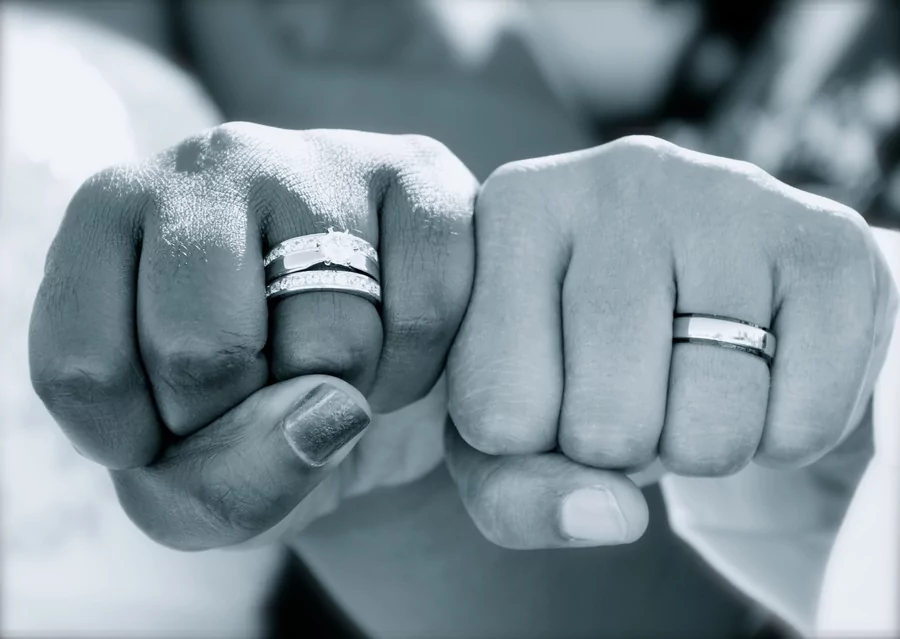
Wedding trends that best reflect this change
The strongest trends go in the same direction: a more embodied staging, tailored details chosen with restraint, and a more intimate narrative. This is seen in the materials, in the signage, in the way guests are welcomed, in the menus, in the seating plan, but also in the overall tone. The wedding seeks less to impress everyone in the same way and more to create an atmosphere true to the couple.
Sustainable trends are those that remain readable outside of photos. A soft but present palette, a well-chosen typography, coherent materials, a decoration that respects the venue, a stationery that genuinely announces the ambiance: all of this ages well. Fashion effects, on the other hand, are quickly spotted. They attract attention at the moment but do not hold well if the rest of the wedding does not follow.
The right selection consists of asking whether an idea reinforces the identity of the wedding or if it merely adds a visual effect. If it does not change anything about the actual experience, it rarely deserves to be prioritized.
Personalizing your wedding with accuracy, without falling into excess
The most reliable method is to choose a few key markers and then develop them properly. Three references often suffice: a palette, a range of materials, and a visual or typographic tone. From there, decisions become simpler. The venue, the stationery, the table, and the signage can respond to each other without giving the impression of an overloaded decor.
The venue and budget must remain real filters. Very complex stationery may start off beautiful but can become difficult to carry through to the menus, place cards, or the seating plan. Very subtle shades may work on a screen but lose all readability once printed. Attractive artisanal details can also become unrealistic as soon as they need to be produced in quantity.
Therefore, it is necessary to remove without hesitation what does not bring either meaning or clarity. An overly broad color code, repeated decorative messages, a symbol used everywhere without real necessity, or a spectacular decoration without continuity between the ceremony and dinner can fatigue more than enrich. Successful personalization is recognized by how natural it appears, not showy.
What are the little details that make a wedding both elegant and personal?
The details that really matter are the ones that guests see, understand, and remember. They have a visual but also an emotional impact. A wedding seems more personal when the choices are not interchangeable. This can come from a material, a way of writing, a rhythm of welcome, a well-thought-out table, or signage that extends the universe announced from the start.
It is also necessary to prioritize. Not everything deserves to be personalized. Some materials structure the experience. Others remain secondary. When you want an elegant result, it’s better to concentrate the effort on a few very visible points rather than disperse energy over a multitude of small additions.
The personalized touches that truly leave an impression
Stationery is one of the most powerful elements because it comes into play before the big day and provides a framework for the rest. Next come the palette and materials, which create an immediate impression, followed by guest reception, menus, the seating plan, and the small narrative signs that connect moments together. When these elements are aligned, the wedding appears thoughtfully designed as a whole.
Concrete cases help to see what works. For an intimate civil wedding, a sober layout and a strong typography may suffice to create a clear identity. For an elegant reception in a domain, textured papers, a soft palette, and discreet signage often provide more cohesion than overly elaborate decoration. For a contemporary wedding, a strong graphic identity can work very well if it remains readable across all materials. For a romantic setting, the stationery can immediately establish a refined atmosphere, provided that the reception genuinely extends this promise.
The classic mistake occurs when one detail is highly worked on and the rest remains generic. An elegant monogram used everywhere is not enough if the tables, menus, and signage do not follow any of the announced codes. Conversely, an ambitious decor loses a lot of its strength if the stationery seems to be chosen separately, with no link to the whole.
Wedding trends that can largely be set aside
The least useful trends are those that standardize the wedding instead of specifying it. Overused decorations, visual effects accumulated without logic, overly personalized materials, or an aesthetic copied without connection to the venue ultimately smooth out the event. The problem is not that an idea is popular. The problem is that it replaces the couple’s guiding line.
Some ideas work very well in photos but much less in real situations. Very original but poorly readable stationery complicates the information. An ambiance announced as very sophisticated followed by a very stripped-down reception creates a diffuse disappointment. Over-coded personalization can also lose guests if it prioritizes internal winks at the expense of understanding.
Therefore, it is necessary to nuance according to contexts.
A minimalist style can be very strong if it is consistently embraced everywhere.
A romantic style can remain very current if it avoids conventional signs.
What needs to be filtered is not an entire aesthetic. It is the choices that have neither utility, nor coherence, nor hold in reality.
The invitation: the first clue that announces the ambiance of the big day
The invitation is the first concrete contact with the universe of the wedding. Before the venue, before the decoration, before the table, it sets an expectation. It indicates whether the event will be formal, intimate, contemporary, refined, stripped-down, or more narrative. It thus serves not only to transmit information but also to give a direction.
Its strength lies in this visual promise. If the invitation announces a very chic reception and the big day is much simpler, the gap is noticeable. Conversely, if it honestly reflects the tone of the wedding, it prepares guests accurately. That’s why it deserves to be considered as a central element, not as a formality to be settled at the end of preparations.
Choosing an invitation that truly resembles the wedding being prepared
The right choice starts with the level of formality. An urban and contemporary wedding does not call for the same codes as a refined reception in a domain or an intimate celebration. The typography, paper, layout rhythm, and density of information must follow this reality. A very formal invitation for a simple wedding may seem out of place. The opposite can also work poorly: a too neutral announcement can weaken a project that is in fact very carefully planned.
The materials are as important as the design. Textured paper, sharp printing, a well-maintained palette, or an airy composition immediately change perception. It is also necessary to think about the follow-up: if the chosen style cannot be replicated on menus, seating plans, or signage, coherence will be harder to maintain.
The link with the venue and the ambiance must remain concrete. A minimalist invitation with strong typography works well for a contemporary wedding. Softer and more textured stationery better accompanies a classic and elegant reception. The simple guideline remains: the invitation must announce the real wedding, not an idealized version of it.
How to know if your invitation accurately reflects the spirit of the big day?
Four signs allow for a quick assessment. First, readability: essential information must be clear at first glance. Next, tone: the visual style must correspond to the level of formality of the wedding. Then continuity: the invitation should be able to communicate with other materials without disruption. Finally, the expectation it creates: it must generate desire without exaggerating what the reception will actually offer.
A just invitation does not seek to say everything. It selects a few precise codes and adheres to them well. If the announced palette completely disappears on the big day, if the typography is nowhere to be found, or if the promised ambiance seems more sophisticated than the actual experience, the discrepancy is immediately felt. Conversely, when guests find the signs seen from the announcement throughout the ceremony, cocktail, and dinner, the whole appears more complete.
From the invitation to the reception: how to create a personalization that holds together from end to end?
Coherence is built from a simple phrase. It’s essential to summarize the wedding in a few precise words: elegant and simple, romantic and textured, contemporary and graphic, intimate and warm. This phrase then serves as a filter. If a detail does not reinforce this direction, it is not a priority.
Personalization holds better when it concentrates on the materials that truly structure the experience. The stationery, signage, and tables often form a solid trio because they are visible, useful, and easy to connect with each other. The rest can follow with more lightness. This logic also helps when the budget or time necessitate making choices.
Stationery, decoration, guest experience: the elements to harmonize
Colors should flow without rigidity between the invitation, menus, flowers, table linens, and welcoming elements. Materials must tell the same family of ambiance. The visual vocabulary should remain stable, whether it is minimalist, romantic, graphic, or classic. The level of sophistication must also remain consistent: a very refined announcement calls for carefully executed materials up to dinner.
The rhythm of the day is as important as the aesthetics. A very sober ceremony, a highly elaborate cocktail, and then a dinner without continuity can break the overall impression. Guests quickly perceive these disruptions. When the welcome, flow, table, and printed materials follow the same logic, the wedding seems more fluid and personal.
The little checklist to go through before finalizing your choices
Before validating, it is necessary to clearly articulate the guiding thread of the wedding in one phrase. If this phrase remains vague, choices may drift in multiple directions. Then it must be verified that a maximum of three priorities concentrate the effort of personalization. Beyond that, coherence becomes harder to maintain, especially if time is lacking.
A second check consists of comparing the announcement and the expected real experience. Does the tone of the invitation, the venue, the decoration, and the table tell the same story? Are the informations still legible across all materials? Do the colors hold up both in print and in real-life situations? If one detail is removed, does anything truly essential go missing from the whole? This question is often the most useful for eliminating superfluous additions.
The best choice is the one that holds up over time, within the budget, and in reality. A personalized wedding does not need to accumulate signs to be memorable. It needs a clear line, a few well-maintained decisions, and an invitation that honestly announces what the guests will experience.